What Is a Variator, What Does It Do? Scooter Variator System, Malfunctions, and Maintenance
How does a scooter variator (CVT) work, and what parts does it consist of? Symptoms of failure such as vibration during takeoff, power loss, and noise, belt and drive kit dimensions, and points to consider during maintenance.


Hızlı cevaplar
Varyatör nedir?
Otomatik scooterlarda vites kutusu yerine kullanılan CVT aktarma sistemidir. Motor tarafındaki ön kasnak, arka kasnak ve aradaki V kayıştan oluşur; aktarma oranını devre göre kendiliğinden ve kademesiz değiştirir.
Varyatör ne işe yarar?
Kalkışta yüksek çekiş, hızlandıkça uzun oran sağlar; sürücü vites değiştirmeden kalkış, hızlanma ve son hız arasında geçiş yapar.
Varyatör arızası nasıl anlaşılır?
Kalkışta titreme, devir yükseldiği halde hızın artmaması, son hızın düşmesi ve varyatör kapağından gelen tıkırtı en yaygın belirtilerdir.
Scooters with automatic transmissions do not have a gearbox; the system that transmits power to the wheel is called a variator or CVT (continuously variable transmission). Your scooter's start, acceleration, top speed, and even fuel consumption largely depend on this system. In this guide, we explain how the variator works, what parts it consists of, its failure symptoms, and what to pay attention to during maintenance.
How Does the Variator Work?
The system consists of three main parts: the front pulley (front variator) on the engine shaft, the rear pulley going to the rear wheel, and the V-belt connecting these two.
- As the engine speed increases, the cylindrical weights (drive set) inside the front pulley slide outward due to centrifugal force.
- The weights bring the pulley halves closer together; the belt moves outward on the front pulley.
- On the rear pulley, the belt moves inward; thus, the ratio increases continuously and the scooter accelerates.
- There is a centrifugal clutch at the rear: above a certain speed, the clutch pads grip the clutch bell (drum) and the scooter moves.
We explained the effect of the drive set's weight on start and top speed in detail in our drive set guide.
Parts of the Variator
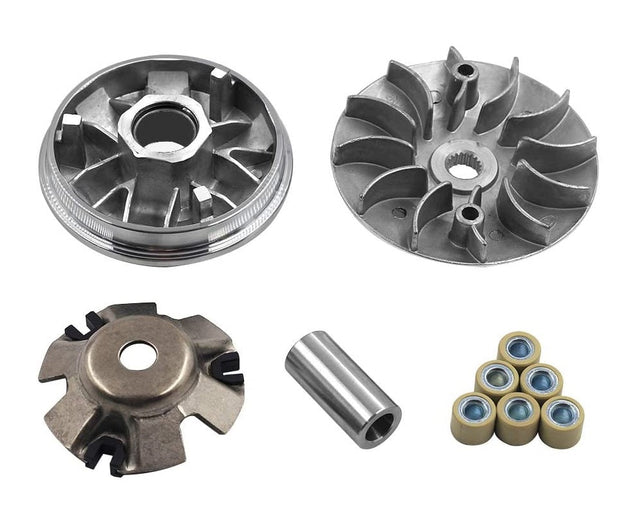
- Front variator (front pulley): Consists of the moving pulley half, bushing, sliding plate (ramp plate), drive set, and fan-equipped fixed pulley.
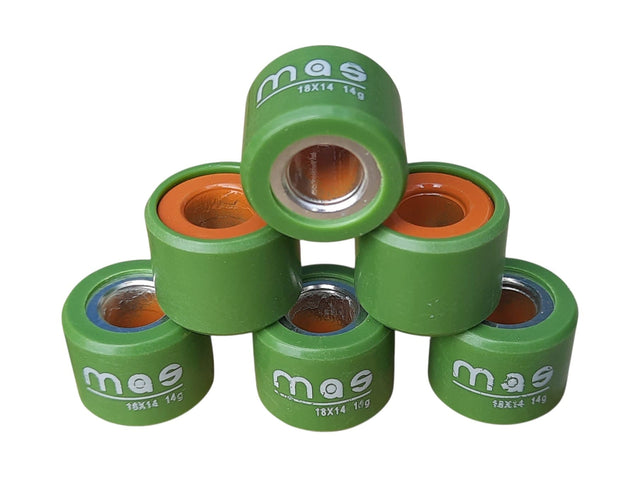
- Drive set: Also known as variator roller, roller, or roll.
- V-belt: Its size is generally written as length-width-angle; for example, "815.5-22-30" for Honda PCX (2011-17).
- Rear pulley and clutch: Fixed and moving cheeks, torque spring, clutch pads, and clutch bell (drum).
Variator Failure Symptoms
- Vibration or shuddering during start: Mostly related to the clutch pads or the surface of the clutch bell.
- RPM increases, speed does not increase: Typical sign of a worn or thinned belt slipping.
- Decrease in top speed, sluggish acceleration: Could be a flattened drive set, worn bushing, or belt.
- Ticking or flashing from the variator cover: May indicate worn drive set, sliding plate, or bearing issues.
- Burnt belt smell: Indicates that the belt is slipping or overheating; have it checked without delay.
We explained when to change the belt and its wear signs in our scooter belt guide.
Variator Maintenance: What to Pay Attention to?
- Interval: Inspection and replacement intervals vary from model to model; refer to the values in your scooter's user manual.
- When the cover is opened: Check the belt's width, cracks, and edge wear; flattening in the drive set; play in the bushing; scratches on the pulley surfaces, and clean the accumulated belt dust.
- Grease: Only the amount of grease recommended by the manufacturer should be used on sliding parts such as the bushing; grease should not get on the pulley surfaces and the belt, otherwise the belt will slip.
- Replacement together: When the drive set is replaced, the condition of the sliding plate and bushing should also be checked.
- Special tools: Special tools are required to secure and remove the pulley. Since incorrect installation can damage the belt and pulleys, we recommend having the process done at a professional service.
Choosing the Right Part
Variator parts vary by engine displacement and model; the pulleys of 50-80 cc and 125-150 cc scooters are not interchangeable. Always compare the size of the belt and drive set with the old part or part code. We explained how to find the part code in our spare part selection guide.
Variator and Transmission Parts at MotoWing
- Scooter 125-150 Front Variator Complete and Scooter 50-80 Front Variator
- RKS Spontini Front Variator Complete
- Belts: Honda PCX, TVS Jupiter 110, Honda Spacy 110
- Drive sets: TVS Wego / Jupiter 10 gr, Spacy, Alpha, Spontini, SYM Fiddle 14 gr
- Honda Activa 125: rear variator moving cheek, clutch pads
- ATV / UTV: CF Moto 800-1000 Front Variator Complete
For all parts, see our transmission parts page. If you are not sure about the part suitable for your scooter, write your model and year on WhatsApp.
Frequently Asked Questions
How many km should the variator belt be replaced?
The replacement interval varies from model to model; refer to the value in the user manual. A belt showing cracks, thinning, or edge wear should be replaced before the interval is up.
Where is the variator grease applied?
Only to the sliding parts (e.g., bushing) specified by the manufacturer and in the recommended amount. Grease should not get on the pulley surfaces and the belt.
Can I remove the variator myself?
Special tools are required to secure and remove the pulley. Incorrect installation can damage the belt and pulleys; we recommend having it done at a professional service.
Which wears out first, the drive set or the belt?
It varies depending on use. When the cover is opened, both should be checked; a flattened drive set with a new belt, or vice versa, will not fully restore performance.